How AI transforms the modern revenue organization into a self-learning, continuously improving growth engine — all playing from one sheet of music.
Imagine a conductor leading an orchestra, but every instrument is a GTM motion: outbound, campaigns, success plays, product signals — all orchestrated by AI.
Version 1.0 — Kampaign.ai / Kai Enterprise
The next decade of go-to-market will be defined by a simple but profound shift:
Companies that grow fastest will not have more people or more tools. They will have a unified AI brain orchestrating their entire GTM operation — from sales, marketing, and success to product, operations, finance, and leadership.
In this new GTM model:
Kai Enterprise is the orchestration layer enabling this transformation.
Key Idea: AI + GTM is not just about automation. It is about building a self-learning growth engine that runs on deliberate, well-designed experiments across the entire revenue organization.
Every modern company struggles with GTM fragmentation. Revenue teams are drowning in tools, dashboards, workflows, and handoffs. Each team is playing an instrument, but there is no conductor.
Graphic suggestion: five disconnected circles labeled Sales, Marketing, Customer Success, Product, Operations with no connecting lines. Light, subtle icons for each function. This mirrors the carousel slide titled “The Problem”.
This fragmentation creates systemic issues:
This is not a tooling problem. It is an architecture problem.
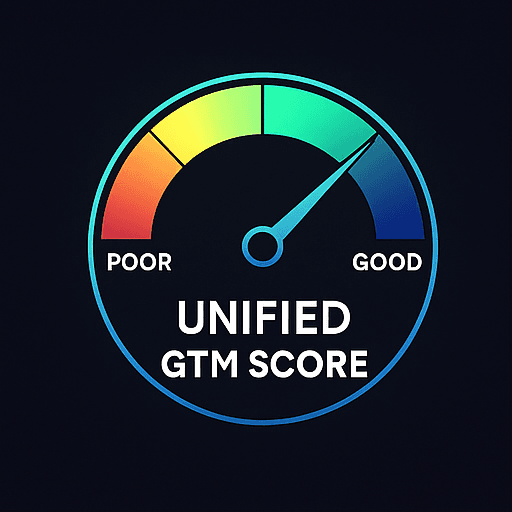
AI allows a once-impossible transformation: all signals, data, conversations, and outcomes across the company flow into one intelligence layer that orchestrates next-best actions for every team in perfect alignment.
Graphic suggestion: a stylized musical score blended with GTM workflows — sequences, triggers, segments, campaigns, accounts, and signals. Caption: “The Unified GTM Score”.
Today, organizations assemble stacks of point solutions. Tomorrow, they will operate from a single orchestration layer that:
Instead of each department running its own playbook, the company shares a living GTM score — continuously updated by AI based on what is working and what is not.
Everyone plays their part, but now they are playing the same song.
The most valuable organizations of the next decade will be those that master iterative, well-designed GTM experimentation.
AI turns every GTM action into a scientific loop:
Graphic suggestion: a horizontal loop diagram with labeled nodes: Design → Test → Measure → Learn → Course-Correct → Retest → Scale. Caption: “Experimentation OS”.
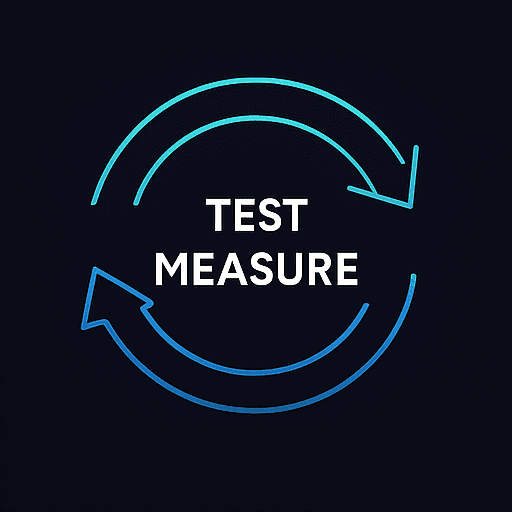
The new AI-native GTM model replaces static playbooks with a deliberate cycle:
This is not random A/B testing. It is structured growth science applied to GTM — using AI to manage the design, execution, and learning loops.
AI doesn't just automate tasks. In the Kai Enterprise model, AI acts as a GTM scientist and conductor:
Based on these signals, AI can:
Graphic suggestion: a condensed dashboard-like card showing key signals (opens, replies, meetings, usage, churn, revenue) feeding into a central AI node labeled “Kai”, which outputs optimized experiments.
As experiments accumulate, the system becomes smarter. As it becomes smarter, growth compounds.
Graphic suggestion: a circular flywheel with nodes labeled: Continuous Experimentation → Continuous Learning → Continuous Optimization → Continuous Alignment → Continuous Growth. Caption: “Self-Improving GTM Machine”.
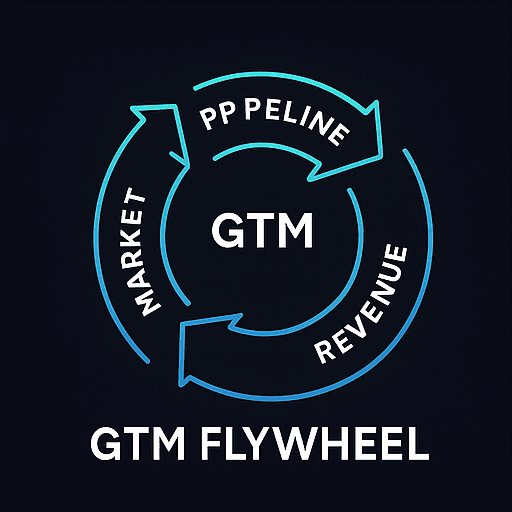
This creates a perpetual motion machine for revenue:
Over time, this flywheel becomes a defensible moat. Competitors can copy features; they cannot copy your compounding experimentation history and learnings.
The AI-native GTM organization is not just automated; it is aligned, orchestrated, learning, and self-correcting.
Graphic suggestion: a central “Kai Enterprise” node connected to six labeled functions: Sales, Marketing, Customer Success, Product, Revenue Ops, Leadership. Each connection has arrows both ways to represent shared data and orchestrated actions.
In this model:
Kai Enterprise is built around a simple but radical idea: give companies a unified AI brain that runs GTM through structured, iterative experimentation.
Connects and harmonizes data from:
Defines and manages GTM experiments across:
Executes GTM actions across channels in real time:
Measures lift and tunes the GTM engine:
Kai detects early churn signals (drop in usage, ticket volume, sentiment) and triggers targeted retention experiments:
Kai identifies accounts with high adoption and expansion signals, then:
Instead of one “best guess” campaign, Kai runs structured experiments:
Kai orchestrates controlled pricing and offer experiments:
The AI-native GTM model creates tangible, executive-level outcomes:
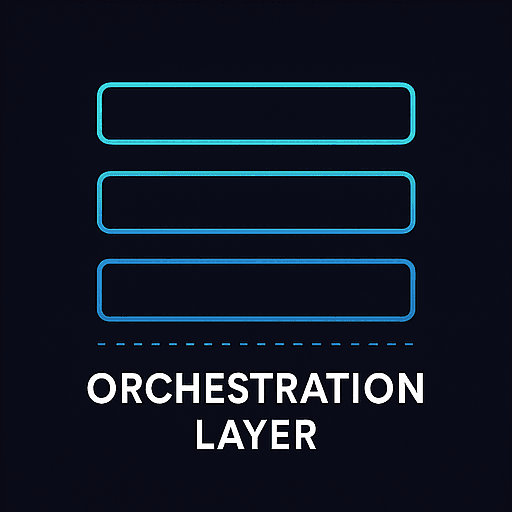
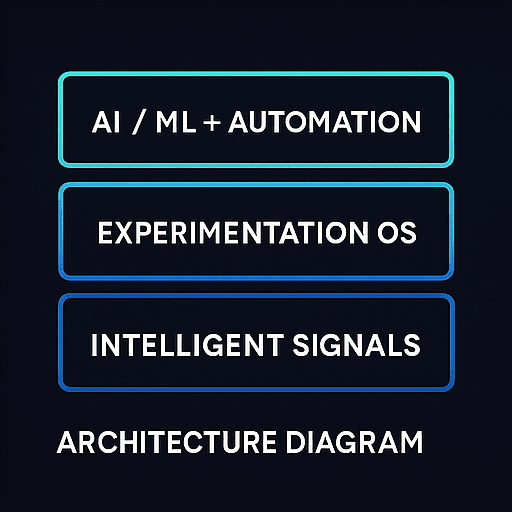
Kai Enterprise sits as an AI orchestration and experimentation layer on top of your existing GTM tools.
Graphic suggestion: a layered diagram with:
Arrows should show data flowing up and actions flowing down, emphasizing the “brain” metaphor.
Kai Enterprise is designed to evolve alongside the AI and GTM landscape. The roadmap includes:
Ultimately, Kai Enterprise aims to become the GTM Operating System — the “one sheet of music” that every function in the organization plays from to hit higher notes together.
If your organization is ready to move from tools to an operating system, from automation to intelligence, and from silos to harmony, then you are ready for Kai Enterprise.
Contact: rajiv@onepgr.com
Let's design your next generation GTM engine — built on AI, powered by experiments, and orchestrated through one sheet of music.
